When to Consider Low-E Glass Replacement for Your Home
I remember the first time I really noticed how much heat was pouring through a window. It was late July, and I was standing near a south-facing double-pane window that had lost its seal. The room felt ten degrees warmer than the hallway. That is when I started paying attention to window energy efficiency, and specifically to Low-E coating and what happens when it fails. If you live in the DFW area, where summer heat is relentless and winter nights can still bite, your windows are working hard. When they start to fail, understanding your options for low-e glass replacement can save you both comfort and money.
What Low-E Glass Actually Does
Low-E stands for low emissivity. The idea is simple: a microscopically thin coating of metal or metallic oxide is applied to the glass surface. This coating reflects infrared heat while letting visible light pass through. In summer, it bounces outdoor heat away from your home. In winter, it reflects indoor heat back inside. The result is better thermal insulation without sacrificing natural light.
Most modern double-pane windows use Low-E coating on one of the inner surfaces of the insulated glass units. The space between the panes is often filled with argon gas fill, which adds another layer of insulation. Together, these technologies can cut heat transfer by half compared to old single-pane windows. But nothing lasts forever. When the seal on an insulated glass unit fails, the argon gas leaks out, moisture gets in, and the Low-E coating can begin to degrade. That is when low-e glass replacement becomes a real consideration.
Signs Your Low-E Glass Needs Replacing
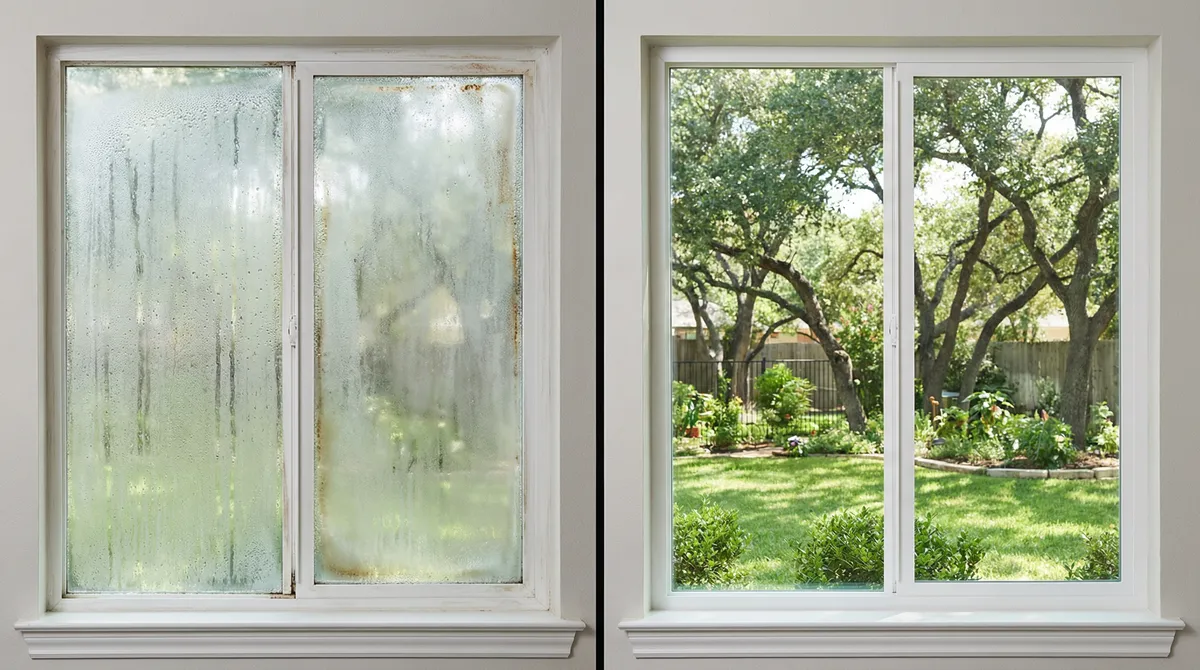
You might notice window condensation between the panes. That foggy look is a classic sign of window seal failure. The desiccant inside the spacer bar has become saturated, and moisture has entered the air space. Once that happens, the insulated glass unit is compromised. The argon gas fill is gone, and the Low-E coating may be damaged by the moisture and temperature cycling.

Another sign is a noticeable draft near the window, even when it is closed. If you hold your hand near the glass on a cold day and feel a chill, the thermal insulation has dropped. You might also see a slight haze or discoloration on the glass itself, which is often the Low-E coating breaking down. At that point, you are no longer getting the UV protection or solar heat gain coefficient that the window was designed to deliver.
I have seen cases where homeowners try to clean the inside of a foggy window, only to realize the fog is between the panes. That is a sure sign you need to look into replacement. Some people consider foggy glass repair as a stopgap, but if the Low-E coating is already damaged, simply replacing the glass unit is usually the better long-term solution.
Repair or Replace? The Practical Difference
Foggy glass repair often involves removing the window sash, taking out the damaged insulated glass unit, and installing a new one. Some companies, like Glass Doctor, offer this service. But not every repair is equal. If your windows are older, the Low-E coating may not match modern standards. Newer Low-E coatings are more effective at blocking UV radiation and managing solar heat gain. So even if repair is possible, upgrading to a current-generation unit through low-e glass replacement can improve your home's overall window energy efficiency.
For DFW home services, where temperature swings are extreme, the solar heat gain coefficient is a key number to look at. A lower SHGC means less heat from the sun enters your home. That is a big deal in summer. Replacement glass units can be ordered with the exact SHGC and U-factor you need, often meeting Energy Star requirements. That kind of performance is hard to match with old, failing glass.
When to Choose Tempered Glass
Not all windows need the same type of glass. For windows near doors, at ground level, or in areas where safety is a concern, tempered glass is a smart choice. It is four to five times stronger than standard annealed glass, and when it breaks, it crumbles into small granular pieces instead of sharp shards. Many manufacturers, including Milgard and Pella, use tempered glass in their insulated glass units for added durability.
If you are planning a whole-home window replacement, talk to your contractor about whether tempered glass is required by local code for certain windows. In many cases, it is not just a safety feature but a requirement. And if you are replacing just one or two units, it is worth asking whether the new glass will match the rest of your home in terms of thickness, coating, and tempering.
Custom Glass Panels and Matching
One challenge I have seen homeowners run into is matching the appearance of new glass with existing windows. Glass from different eras can have slightly different tints or reflectivity. If you are replacing a single unit in a front-facing window, you want the new custom glass panel to blend in. That is where working with a company that understands the product line matters. Brands like Milgard and Pella have specific coating options, and a good installer will help you select the right one.
Another factor is the spacer material. Some spacers are made of metal, which conducts heat. Others use foam or composite materials that improve the overall thermal performance of the insulated glass unit. When you order a replacement, you have the chance to upgrade that detail as well. It is a small thing that adds up over time.
The Role of Warranty and Professional Installation
Glass replacement is not a DIY project for most people. The units are heavy, the seals are delicate, and improper installation can lead to premature failure. A glass replacement warranty protects you if the new unit fogs up or loses its seal within a certain period. Most reputable manufacturers offer warranties of ten years or more on the glass unit itself. But the installation work should also carry a warranty from the contractor.
When I had a window replaced a few years ago, I made sure to ask about both. The installer explained that the warranty on the glass covered manufacturing defects, while their labor warranty covered installation errors. That clarity helped me feel confident in the work. For anyone considering low-e glass replacement, asking about warranty coverage is a simple step that pays off.
Cost vs. Value in the DFW Climate
Replacing a single insulated glass unit can cost anywhere from a few hundred to over a thousand dollars, depending on size, coating, and whether the glass is tempered. That might seem steep, but compare it to the cost of running your air conditioner harder every summer. In the DFW area, where temperatures regularly hit the upper 90s, a window with failed Low-E coating can add noticeable strain to your HVAC system.
I have talked to homeowners who waited years to replace a foggy window, thinking they would save money. In the end, they spent more on cooling and heating than the replacement would have cost. The math is usually in favor of acting sooner. Plus, the comfort difference is immediate. No more cold drafts in January, no more hot spots in July.

Final Thoughts on Making the Call
If you are seeing window condensation, feeling drafts, or noticing that your energy bills are climbing, it is worth having a professional inspect your windows. They can test the seal, check the Low-E coating, and tell you whether repair or replacement is the better path. For most older double-pane windows, especially those with failed seals, low-e glass replacement is the right call. It restores thermal insulation, improves UV protection, and brings your home up to modern energy standards.
Whether you are dealing with a single foggy window or planning a whole-home update, the technology in today's insulated glass units is better than ever. With argon gas fill, advanced Low-E coatings, and options like tempered glass, you can get windows that perform well for decades. And if you live in the DFW area, where the climate demands it, that investment pays for itself in comfort and savings.